Who cares about what you can learn, when the demands of your life could be accomplished by an octopus. Exaggeration? Yea. Does it matter how much I’m exaggerating if you don’t really know what the thinking capacity of an octopus is ? If you don’t know, it’s really interesting, you should look it up. If you do know, then isn’t it disrespectful just how much alike we are to those beak having, color changing, ink squirting, delicious, little alien looking creatures.

The disrespect life has bestowed upon us is no coincidence. Education seems like a burden now. It is through trial and error that most all things are understood or expanded on. Reading and learning is no different. Like some kind of egocentric experiment we are constantly and thoroughly examined and exploited. Much like, octopus.
This is my take on it..
In the short history of the United States we’ve gone through many phases. Transitioning from with holding education —where the people being excluded strived for the power that comes with knowledge, to education through conversion — where knowledge was lightly distributed for the expansion of the church or benefit of capitalist, to being widely distributed but commonly rejected due to sociocultural and geopolitical influences or factors.
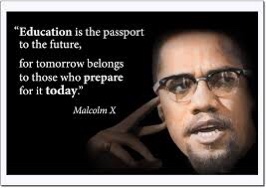
How does learning go from being prevented to being uncared for ?
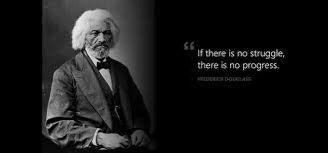
Let’s start from the top, with literacy being withheld. (1)Fredrick Douglas, a former slave who grew up illiterate, was excited but forbidden to learn how to read and write. Seeing how his master tried to keep the world of reading and writing from him showed Douglass that there was immense power to be gained from what he could learn – a power that he could use to destroy his masters reign over him.(2) Plantation owners didn’t always agree on educating the slaves but many still delegated sophisticated work, including management of operations that required literacy. Keeping slaves from reading and writing wasn’t a profitable strategy, but educating slaves wasn’t safe either.
To expand on this, we need to focus on the risk of literacy for both sides and translate it into today’s time. The slave owners are navigating profits with a known danger where the slaves are navigating knowledge with unrealized consequences.
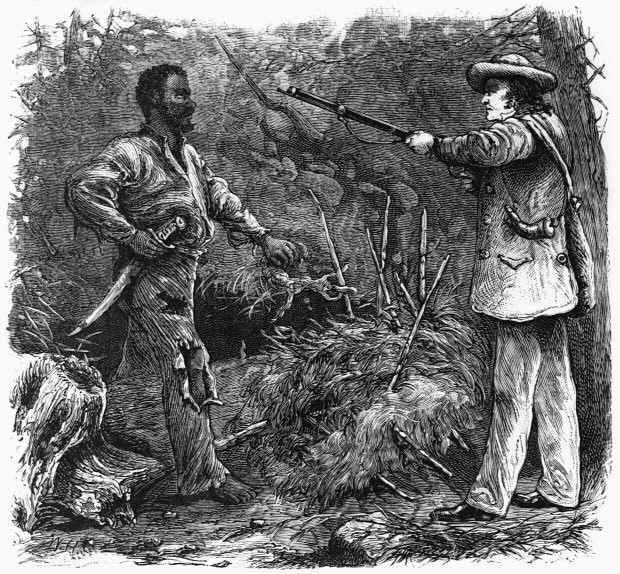
For the plantation owners it was straight forward: Educate the slaves and risk them organizing. (3) Even education through the church created structure that proved deadly.
For the slaves, this new found wealth opened doors to more doors. Frederick Douglas found himself with an ambition but no guide. After learning how to read and write, he wrote “It opened my eyes to the horrible pit, but no ladder upon which to get out.” His quote is specifically on slavery but transcends time and universally plugs into most social issues.
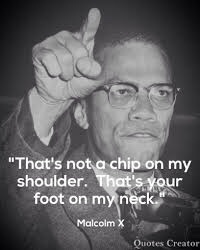
Literacy is a tool that is used to help carve the path of an individual through life. People have been kept from it and realized it’s power. The people controlling it realized that if you give the tool of literacy to them, it can prove overwhelming and destructive.
Work cited
(1) Frederick Douglass & The Power of Literacy By Riya Shankar, V Form
(2) How Literacy Became a Powerful Weapon in the Fight to End Slavery BY COLETTE COLEMAN
(3) Slavery and Freedom in the British West Indies, 1823-33: The Role of Education by Olwyn Mary Blouet
 Kings and Things: The Podcast